

 Polski
 Română
 Deutsch
 Español
 Português
 Italiano
Uncategorised
Wedding Dress Trends 2026: What Bridal Boutiques Should Stock This Season
Jun
Staying ahead of bridal trends is one of the most valuable competitive advantages a boutique can have. Brides research their dress options for months — often a year or more before the wedding. If your boutique carries the styles they’ve been saving on Pinterest and Instagram, you become the obvious destination.
Here’s a comprehensive look at the wedding dress trends that will dominate 2026, and what they mean for your wholesale buying strategy.
1. Minimalist Elegance Continues to Lead
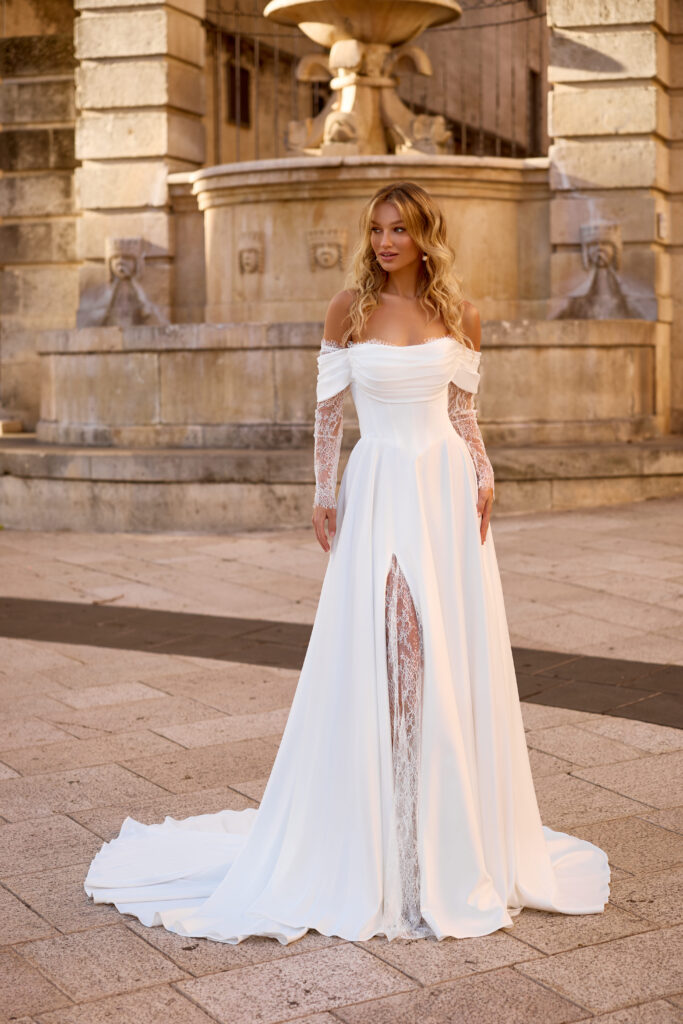
The clean, architectural silhouette trend that emerged post-2020 shows no signs of fading. Brides in 2026 are drawn to dresses that feel effortless and modern — bias-cut satin, simple A-lines, and crepe column gowns with minimal embellishment.
What to stock: Sleek satin slip dresses, structured crepe gowns, simple A-lines with clean necklines (square, straight, scoop). These styles photograph beautifully and appeal to a wide age range.
2. Romantic Florals and 3D Embellishments
As a counterpoint to minimalism, a strong segment of brides — particularly those planning garden weddings and destination celebrations — is embracing romance. Floral appliqués, petal-effect layers, and 3D fabric textures are appearing across all price points.
What to stock: Dresses with subtle floral details rather than heavy embellishment. One or two statement ‘wow’ pieces with dramatic florals as hero styles, balanced by cleaner options.
3. The Return of Sleeves
Sleeves are back — in a completely different way than the structured puff sleeves of the early 2020s. In 2026, the trend is toward elegant, understated sleeve treatments: delicate long sleeves in sheer lace or georgette, flutter sleeves, and detachable overskirts with sleeve details.
What to stock: At least two or three sleeve options in your collection. These dresses also appeal to brides planning church ceremonies or more formal settings where coverage is desired.
4. Blush, Ivory, and Champagne Replacing Pure White
Pure white remains a staple, but off-white tones — ivory, champagne, nude, and soft blush — are increasingly preferred. Brides find these tones more flattering and more ‘bridal’ than stark white.
What to stock: Ensure your collection covers a range of white-adjacent tones. Many manufacturers offer the same styles in multiple colorways — take advantage of this to expand variety without expanding your SKU count dramatically.
5. Sustainable and Thoughtful Design
Sustainability awareness is influencing bridal purchasing decisions, particularly among younger brides (25–32 age range). This doesn’t necessarily mean eco-certified fabrics — it means quality construction, timeless design, and the sense that the dress has long-term value.
What to stock: Classic, well-constructed dresses from manufacturers who emphasize quality. Being able to speak knowledgeably about fabric sourcing and construction quality is a sales advantage.
6. Statement Backs
The back of the dress has become as important as the front. Dramatic open backs, intricate lace-up detailing, corset closures, and bow details continue to be sought-after features — driven largely by viral wedding photography and social media sharing.
What to stock: Every collection should include at least two or three styles with standout backs. These are natural social media moments and a strong selling point during appointments.
7. The ‘Second Dress’ for the Reception
More brides in 2026 are buying a second dress for the reception — often a shorter, lighter style they can dance in. This trend creates an additional revenue opportunity for boutiques.
What to stock: Midi-length dresses, mini styles in bridal-appropriate fabrics (satin, lace), and fashion-forward looks that feel celebratory without being traditional bridal. Price these accessibly to encourage the add-on purchase.
Planning Your 2026 Buying Strategy
With these trends in mind, a balanced 2026 bridal collection might include:
- 40% minimalist/clean styles (broad appeal, reliable sellers)
- 25% romantic/embellished styles (hero pieces, high visual impact)
- 20% styles with sleeves or coverage options
- 15% reception/second dress options
Adjust ratios based on your specific clientele — a boutique serving conservative markets will lean more toward coverage; a boutique near beach wedding venues will want more minimalist pieces.
Where to Source Trend-Forward Wholesale Collections
The best way to stay current is to work directly with manufacturers who release new collections regularly. European manufacturers — particularly those in Ukraine, the EU, and the Mediterranean — have historically led bridal design trends before they reach mass-market distributors.
LadyDiBride releases 4 new collections per year, with styles that reflect current runway and social media trends adapted for the wholesale market. With worldwide delivery and a minimum order of just 3 dresses, you can test new trends without over-committing inventory.
Request access to our 2026 wholesale catalog to see this season’s collections.
Also read: How to Choose a Wholesale Wedding Dress Supplier for Your Boutique
Related Articles
